16 Sept 2025
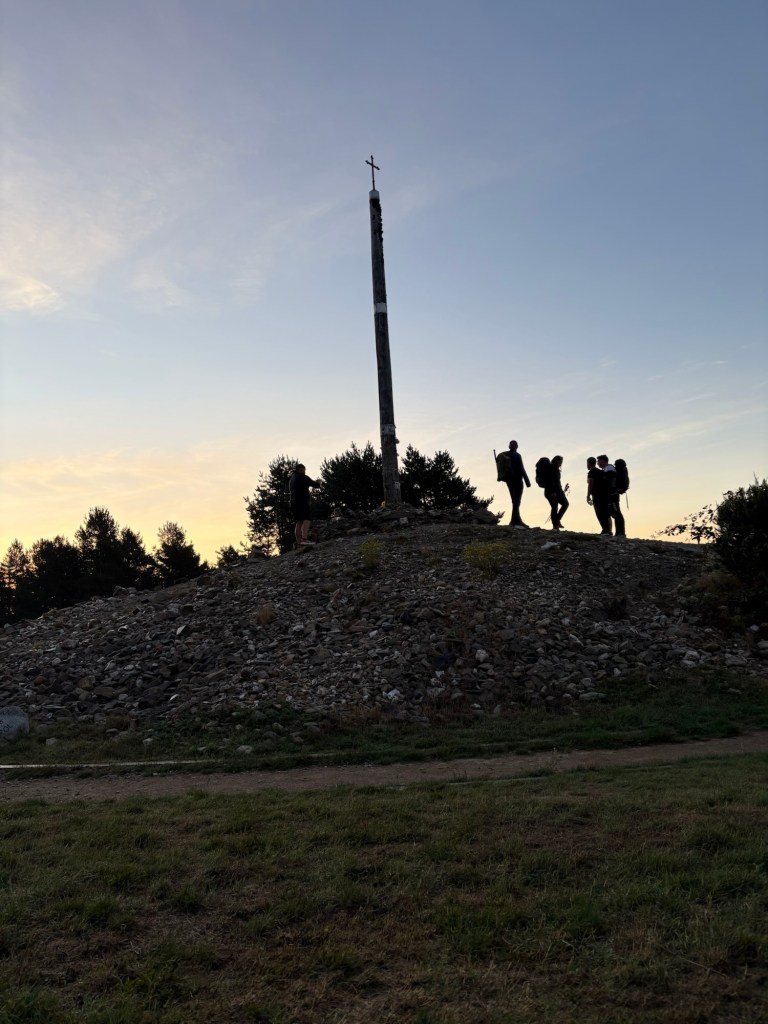
Amazing glowing sunrise this morning as I climbed the last 2km to the top of the mountain.

At the peak at 1,504m (4,934ft) sits the Cruz de Ferro (Iron Cross). It is a special place for pilgrims and has an eerie solemnity. Suspected of being a spiritual location for the early Celts (yes Celts! With bagpipes even!) that settled here thousands of years ago and made a large pile of stones, it was then used by the Romans for whom the mound may have been a waypoint marker for the mountain pass and/or a shrine to the god Mercury. In the 11th century a monk/hermit named Gaucelmo placed a tall iron cross on the top of the mound. Since then, pilgrims have continued to place a stone on the mound on their way to Santiago de Compostela, many bringing their stone from their homes all over the world. For some the stone symbolizes a prayer or wishes for a loved one or an offering. For others, the stone symbolizes sins from which the pilgrim wishes to unburden themselves. It is deeply personal and moving to see.

With the peaceful moments behind me, I began the downhill descent of almost 1000 meters. Continued concern for my (delicate and feminine!) easily twistable ankles was a major factor in taking my sweet time carefully stepping through the shale and loose rocks all the way down. It was very much like my earlier descent into the town of Zubiri on my 3rd day! I underestimated how long it would take me to walk today and I ended up really melting in the heat for the last 5 (blessedly flat) km.
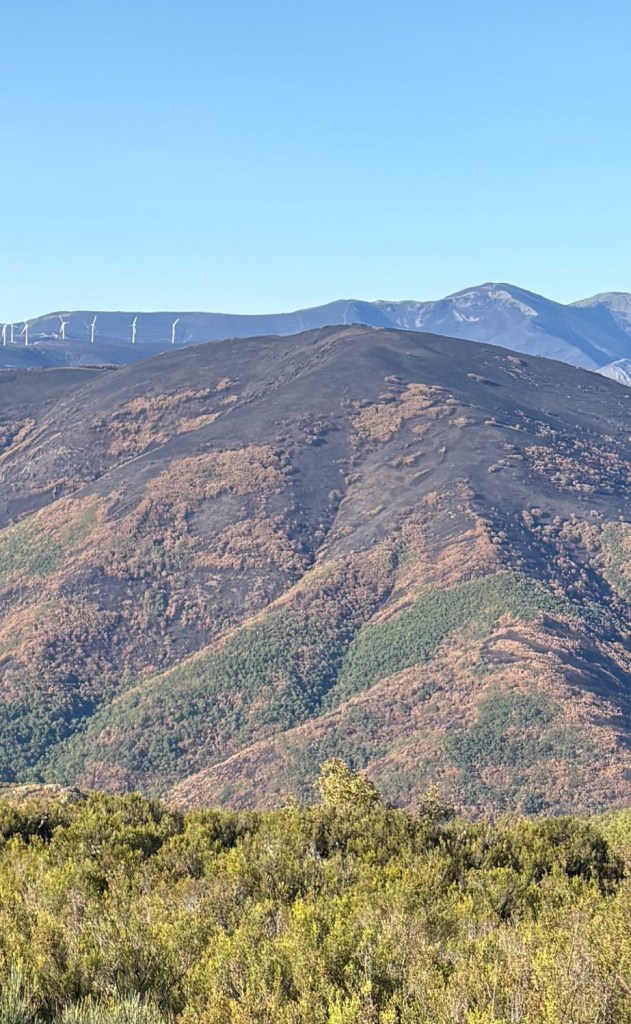
Even though I complain about climbing and descending these mountains in Spain, they have been my absolute favorite days for breathtaking views by far. We passed by some clear evidence of the recent horrific wildfires that had closed this section of the Camino just one month ago due to air quality. It was devastating to see the effects of the fire on these gorgeous mountains. They still continue to burn in locations further north and further south of the Camino.
Finally arriving in Ponferrada, a town that has been a cross roads of trade since Roman times (or even earlier), I headed over to the Castillo de los Templarios (Castle of the Templar Knights) for a quick tour. Constructed originally in the 1100s, additions were made in the 1400s and 1500s. It is the classic looking medieval castle fortress of fairy tails from which the Templar knights defended Christianity and assisted pilgrims on their Camino.


 Paso a Paso
Leave a reply to Kristen Saranteas Cancel reply